Garage Bike Storage Ideas: 7 Ways That Actually Work
Garage Bike Storage Ideas That Actually Work

Garage bike storage is the difference between a garage you can park in and a garage full of bikes leaning on everything. A bike on the floor takes about six square feet. Four bikes on the floor take the whole parking spot. Put them on the wall or the ceiling, and the floor comes back.
This guide compares seven ways to store bikes — wall hooks, wall racks, ceiling hoists, floor racks, vertical stands, rail systems and family setups — with real prices, spacing and weight limits. By the end you will know which setup fits your bikes, your wall and your budget.
THE SEVEN WAYS, AT A GLANCE
Wall hooks are the cheapest: a vinyl-coated hook screwed into a stud, the bike hangs vertically by its front wheel. A hook runs about $10 to $30, holds up to 50 pounds, and takes one bike per 16 inches of wall. Buy hooks when the budget is small and the wall is free.
A wall-mounted horizontal rack holds the bike flat against the wall on two arms, both wheels off the ground. A rack runs about $30 to $80 per bike, holds up to 50 pounds, and keeps the bike at a height where the kids can reach it. Buy a rack when the bikes get used weekly and must come down fast.
A ceiling hoist lifts the bike flat against the ceiling on pulleys, out of the way entirely. A hoist runs about $20 to $50 per bike, holds up to 50 pounds, and needs a ceiling at least 9 feet high. Buy a hoist for the bike that comes out twice a year.
A freestanding floor rack holds two to five bikes upright on the floor, no drilling needed. A rack runs about $30 to $100, holds any bike you roll into it, and moves wherever you want. Buy a floor rack when you rent, or when drilling the wall is not an option.
A vertical floor stand holds one or two bikes upright by the rear wheel, using no wall at all. A stand runs about $50 to $150, holds up to 50 pounds per bike, and fits in a corner the car never uses. Buy a stand for a small garage with one free corner.
A rail system is a metal track screwed to the wall with sliding hooks, so the bikes slide sideways along the rail. A rail with four hooks runs about $40 to $100, and it is the only system that lets you shuffle bikes without taking them down. Buy a rail when the bikes change — kids grow, bikes come and go.
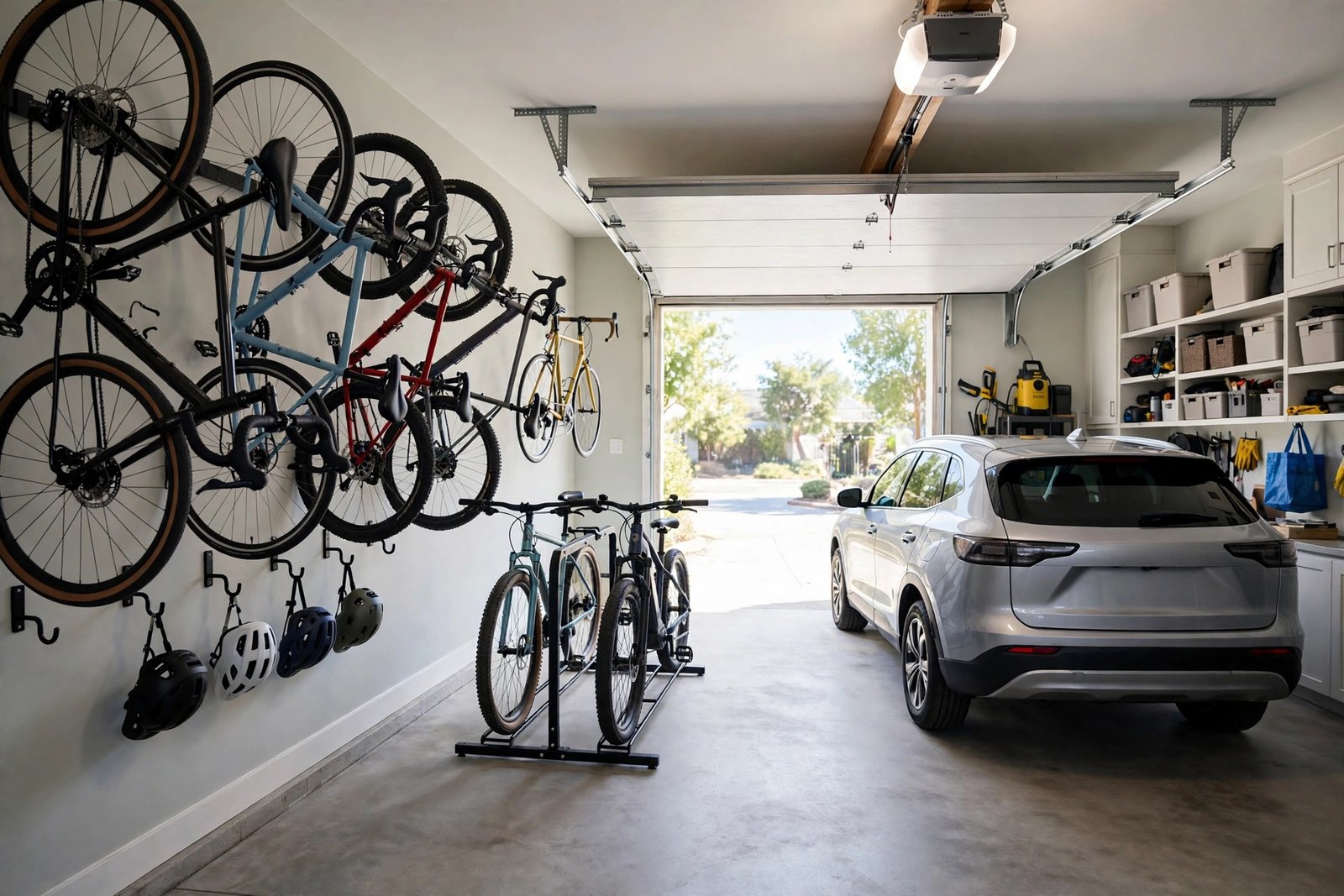
A family setup is not a product, it is a layout: the daily bikes low on the wall where the kids reach them, the weekend bikes high on hooks, and the seasonal bike on the ceiling hoist. The setup costs whatever the pieces cost, and it is the only setup that survives four bikes and two kids.
WALL HOOKS: THE CHEAPEST WAY UP
A wall hook is a ten-dollar solution that works for a decade. Screw it into a stud — never into drywall alone, which holds about 25 pounds before it pulls out — hang the bike by its front wheel, and the bike stands vertically against the wall, taking about 16 inches of wall width and zero floor.

Two things to get right. First, the spacing: 16 inches per bike is the minimum, 20 inches is comfortable, because handlebars overlap and fight each other at 16. Second, the height: hang the hook so the rear wheel clears the floor by two inches, or the tire drags and marks the wall. A strip of rubber or a small mat behind the rear wheel keeps the wall clean.
One honest warning: do not hang a carbon bike by its front wheel for months. Carbon rims and lightweight wheels are not built to carry the bike’s weight on one spoke bed for a whole winter. Hang steel and aluminum bikes by the wheel, and put carbon bikes on a horizontal rack or a floor stand instead.
CEILING HOISTS: BIKES ON THE CEILING
A ceiling hoist is the same pulley idea as our garage ceiling storage guide, pointed at bikes. The bike hangs flat against the ceiling on two straps, the pulleys lower it to the floor when you need it, and it holds up to 50 pounds per bike. A hoist runs about $20 to $50, and it is the only setup that takes zero wall and zero floor.

The tradeoff is the ladder-free promise with a catch: the hoist lowers the bike, but you still lift it onto the straps at chest height. A 30-pound road bike is easy. A 55-pound e-bike is not — e-bikes belong on the floor, on a floor rack or a vertical stand, never on a hoist or a hook. Check the weight before you buy, and check the ceiling height too: a hoist needs at least 9 feet of ceiling, or the bike hangs low enough to hit the car roof.
FLOOR RACKS AND VERTICAL STANDS: NO DRILLING
A freestanding floor rack is the renter’s answer. Roll the bikes in, the rack holds them upright by the wheels, and nothing is screwed to anything. A two-bike rack runs about $30 to $60, a five-bike rack about $60 to $100, and the whole thing moves when the garage gets rearranged. The catch is floor space: a five-bike rack takes about five feet of floor, and it never gives it back.

A vertical floor stand is the small-garage answer. It holds one or two bikes upright by the rear wheel, standing on its own base in a corner, for about $50 to $150. No wall, no drilling, no floor taken beyond the corner. The catch is stability: a stand with a narrow base tips when a kid pulls a bike out. Buy a stand with a wide base and a low center, and test it with a hard pull before you trust it.
RAIL SYSTEMS AND THE FAMILY SETUP
A rail system is a metal track on the wall with hooks that slide along it. A rail with four hooks runs about $40 to $100, and the sliding is the whole point: when the kids’ bikes get bigger, you slide the hooks apart instead of drilling new holes. It is the only system that grows with the family without new holes in the wall.

The family setup uses all of it at once. Daily bikes go low on the wall rack, where the kids can reach them without a ladder. Weekend bikes go high on hooks. The seasonal bike goes on the ceiling hoist. Helmets hang on hooks by the door, and shoes go on the shelf below the bikes — our garage shoe storage section below covers that. The rule is one hook per bike, one helmet hook per rider, and nothing on the floor that a car tire can roll over.
HOW MANY BIKES FIT?
Count the wall, not the bikes. A wall hook takes 16 inches per bike, 20 if you want comfort. A 10-foot wall holds six bikes on hooks, seven if you stagger the heights — hang every second bike six inches higher, and the handlebars stop fighting. A ceiling hoist takes about 6 feet of ceiling per bike, laid flat. A floor rack takes about 12 inches of floor width per bike, plus the length of the bike itself.
And leave a walkway. Bikes stored along the wall still need a path to the door, and a path blocked by handlebars is a path nobody uses. Keep 24 inches clear between the bikes and the car, or the car door hits a pedal every morning.
SHOES, HELMETS AND THE SMALL STUFF
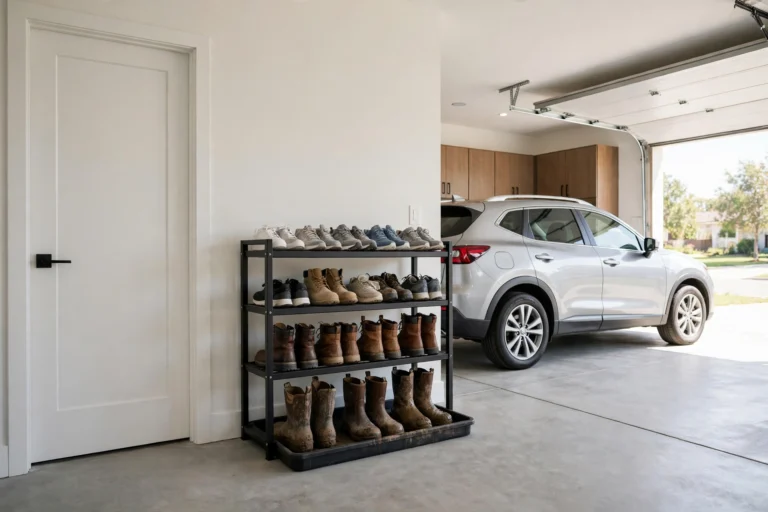
Bikes bring friends: helmets, shoes, gloves, pumps, locks. Garage shoe storage belongs right under the bikes — a low shelf or a boot tray by the door, about $20 to $50, holds four pairs of shoes and keeps the mud off the floor. A pair of hooks on the wall above the shelf holds the helmets, one hook per rider, at a height the kids can reach.

The pump goes on the wall next to the bikes, not in a box. A pump in a box is a pump you never use, and a flat tire on a Saturday morning is a ride that never happens. A lock hangs on the same hook as the helmet, so the lock and the helmet leave together.
E-BIKES NEED THE FLOOR
E-bikes weigh 50 to 70 pounds, twice a normal bike, and that changes the storage. Do not hang an e-bike by one wheel on a hook rated for 50 pounds — the hook holds, until it does not, and an e-bike falling from the wall takes the bikes next to it down too. Do not put an e-bike on a ceiling hoist either. E-bikes live on the floor: a floor rack, a vertical stand with a wide base, or leaning on a wall pad. And charge the battery where you can see it — never charge an e-bike battery on a ceiling rack, where a problem hides until it is too late.
WHAT TO AVOID
The most common mistake is hanging bikes by the front wheel on drywall anchors. Drywall holds about 25 pounds, a bike weighs 25 to 35, and the anchor pulls out within a month. Hooks and racks belong in studs, full stop — a stud finder and two lag bolts cost less than a bike repair.
The second mistake is storing bikes where the car door swings. A pedal in the door’s path dents the door, chips the pedal, and starts an argument every morning. Measure the door swing before you hang the first hook.
The third mistake is forgetting the walkway. Bikes along the wall still need 24 inches clear to the door, or the garage becomes a maze nobody walks through.
WHAT IT COSTS
A starter setup — two wall hooks and a helmet hook — runs about $30 to $80. A family wall — a rail with four hooks and helmet hooks — runs about $60 to $150. A full setup — wall racks, a ceiling hoist and a floor rack for the e-bike — runs roughly $150 to $400.
The honest advice is the same as every article in this series: start with two hooks, live with them for a month, and only then buy the next piece. The first month shows you what is actually missing, so the second purchase is the right one.
FREQUENTLY ASKED QUESTIONS
How do I store bikes in a small garage?
Hang them on the wall with hooks, 16 to 20 inches apart, or use a vertical floor stand in a corner. Wall storage takes zero floor, and a vertical stand takes only the corner. Keep the daily bike low where you can reach it, and the seasonal bike on the ceiling.
What is the best way to hang a bike in a garage?
A vinyl-coated hook in a wall stud, bike hanging vertically by its front wheel, is the cheapest and most common way. A horizontal wall rack is better for carbon bikes and for bikes you grab weekly, because nothing hangs by the wheel.
How much space does each bike need?
Sixteen inches of wall per bike on hooks, 20 inches for comfort. A floor rack takes about 12 inches of floor width per bike. A ceiling hoist takes about 6 feet of ceiling per bike, laid flat. Stagger every second bike six inches higher and the handlebars stop fighting.
Is a ceiling hoist safe for bikes?
Yes, for normal bikes under 50 pounds, on a ceiling at least 9 feet high, with the straps checked twice a year. No, for e-bikes — they weigh 50 to 70 pounds and belong on the floor, never on a hoist or a hook.
Can I hang a bike by one wheel?
Yes, for steel and aluminum bikes — hanging by the front wheel is the standard way and does not damage the wheel. No, for carbon bikes: hang them on a horizontal rack or a floor stand instead, so no weight sits on one spoke bed for months.
How do I store kids’ bikes in a garage?
Low on the wall, where the kids can reach them without a ladder — a horizontal rack at 36 inches high, or a floor rack they can roll the bike into themselves. Keep their helmets on a hook right above the bike, so the helmet and the bike leave together.
How do I store an e-bike in a garage?
On the floor, on a floor rack or a wide-base vertical stand. Never hang an e-bike by one wheel and never put it on a ceiling hoist. Charge the battery where you can see it, and keep the bike away from the car door swing.
How much does garage bike storage cost?
Two wall hooks and a helmet hook run about $30 to $80. A rail with four hooks runs about $40 to $100. A full setup with racks, a hoist and a floor rack runs roughly $150 to $400.
Where do I put bike shoes and helmets?
Shoes go on a low shelf or a boot tray by the door, about $20 to $50. Helmets hang on hooks on the wall above the shelf, one hook per rider, at a height the kids can reach. The pump hangs on the wall next to the bikes, not in a box.
How do I store bikes for winter?
Clean them, oil the chain, and hang them on the wall or the ceiling hoist — off the floor, where winter damp cannot reach the tires. Pump the tires to full pressure before storing, and check them once a month, because tires lose air all winter.
THE BOTTOM LINE
Garage bike storage works when the bike matches the mount. Hooks for steel and aluminum bikes, horizontal racks for carbon and daily riders, hoists for the seasonal bike, floor racks for e-bikes and renters. Screw into studs, leave 24 inches of walkway, and keep the helmets and shoes with the bikes.
Once the bikes are up, the rest of the garage is the next job. Our garage storage ideas guide covers the racks, cabinets and shelving that share the wall with your bikes, and our garage ceiling storage guide covers the overhead racks and hoists that hold the seasonal gear above them.