Garage Shelving Ideas: How to Choose the Right Shelves
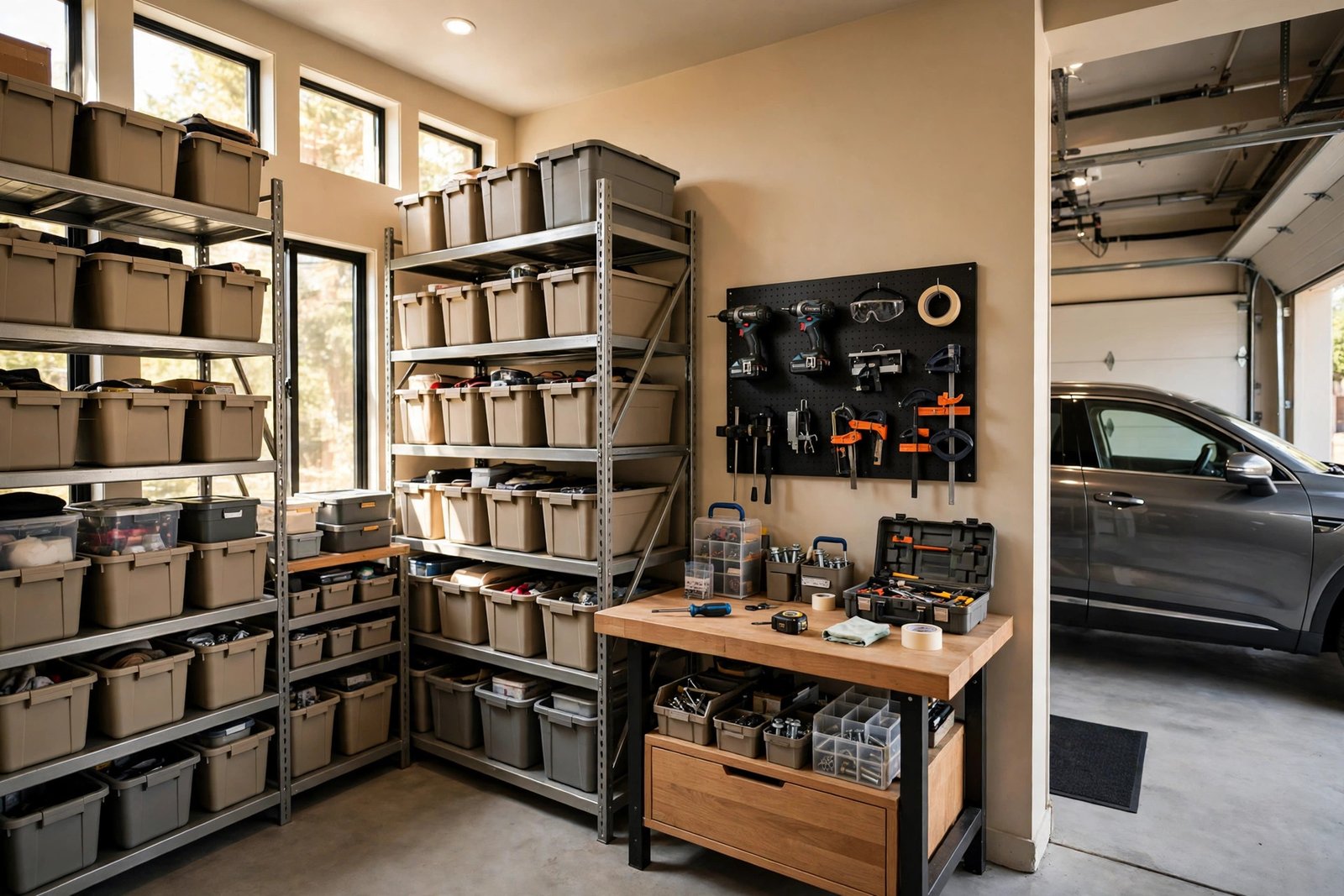
Garage shelving is the fastest way to get your floor back. Not cabinets, not a full makeover — shelves. A wall of shelves takes everything off the floor and puts it at eye level, where you can actually find it. The trick is buying the right shelves the first time, because the wrong ones sag, rust, or pull out of the wall within a year.
This guide compares the four types that matter — steel, wire, wood and wall-mounted — plus ceiling storage, with real weight limits, sizes and prices. By the end you will know exactly which shelves fit your garage, what they hold, and what they cost.
THE FOUR TYPES, COMPARED
Every garage shelf is one of four things. Freestanding steel shelving is the workhorse: four posts, four or five shelves, no wall needed. A standard 4 by 2 foot unit runs about $60 to $150 and holds 150 to 350 pounds per shelf. Heavy-duty steel units run about $100 to $300 and hold 500 to 1,000 pounds per shelf. Buy steel when the stuff is heavy — paint cans, toolboxes, car parts.
Wire shelving is the chrome rack you see in every garage photo. Same size, about $60 to $150, and the open wire lets dust fall through instead of piling up. It holds 150 to 350 pounds per shelf, same as basic steel. The catch is damp garages: cheap chrome wire rusts where the coating chips. Buy wire for bins and light boxes, not for a wet garage floor corner.
Wood shelving is the DIY option. Two-by-fours and plywood, built to whatever size your wall needs, for about $40 to $100 in lumber. It holds as much as you build it to hold, and you can make it 12 inches deep for a narrow wall or 24 inches deep for big bins. The catch is time: a Saturday to build, and you need a saw. Buy wood when the wall is an odd size no store shelf fits.
Wall-mounted shelves bolt straight into the studs above the workbench. One 4-foot shelf runs about $30 to $80, and it holds 50 to 100 pounds when it is properly anchored. Buy wall-mounted when the floor is already full and the only space left is above the bench.
HOW MUCH WEIGHT CAN A SHELF HOLD?
Read the rating twice before you believe it. A shelf rated for 350 pounds usually means 350 pounds spread evenly across the whole shelf, not 350 pounds of paint cans stacked in one corner. Put all the weight in the middle and a 350-pound shelf sags at 200. Spread the load, heavy things at the edges near the posts, light things in the middle.
The second number that matters is the unit rating, not the shelf rating. A five-shelf unit rated at 1,000 pounds total does not hold 1,000 pounds per shelf. It holds 200 per shelf. Check the label for both numbers before you buy, and keep the heaviest shelf at the bottom, where the frame is strongest.
And the rating assumes the shelf is standing on a flat, level floor. A unit that rocks on an uneven garage floor loses half its strength and all of its safety. Shim the feet until it does not move when you push it. If it still rocks, the floor is the problem, not the shelf.
MEASURE BEFORE YOU BUY
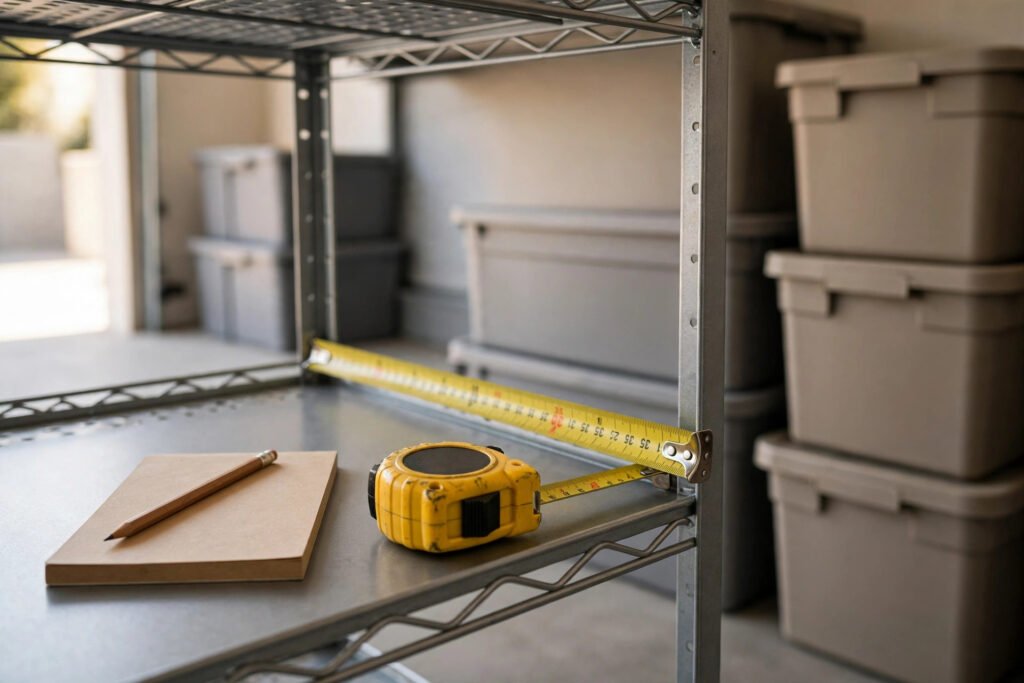
Nearly every wrong shelving purchase traces back to skipping this step. Get the tape measure out and write down three numbers. The width of the free wall. The depth you can spare: 12 inches for a narrow wall, 18 inches for most garages, 24 inches only where you have floor to give. And the ceiling height, because a 72-inch unit does not fit under a 70-inch duct.
A shelving unit 24 inches deep eats 24 inches of floor, and it never gives that back. In a small garage, that is the difference between parking the car and leaving it in the driveway. Measure first, buy second. The shelves will still be on sale next weekend.
STEEL SHELVING: THE HEAVY-DUTY PICK
Heavy duty garage shelving means steel, and steel means two brands dominate the aisle: Gladiator and Husky. A Gladiator 4 by 2 foot steel unit runs about $150 to $300, and a Husky equivalent runs about $100 to $250. Both hold 500 to 1,000 pounds per shelf when the weight is spread out. The difference is mostly finish and accessories — Gladiator sells matching cabinets and wall systems, Husky sells the shelf on its own for less.
Steel is the right call for paint cans, car parts, toolboxes and anything that would dent a wire shelf. It is the wrong call for a damp corner, where the feet rust first. Keep steel units six inches off a wall that gets wet, and put a rubber mat under the feet if the floor sweats in summer.
One honest warning: the cheapest steel shelf in the store is rarely the deal it looks like. A $60 unit rated at 150 pounds per shelf holds bins and holiday decorations just fine. It does not hold a toolbox, a stack of paint cans and a car battery. Match the rating to the load, not the price tag to your budget.

WIRE SHELVING: BEST FOR BINS
Chrome wire shelving is the best home for clear bins, and that is most of what a garage stores. The wire lets air move, so bins do not trap damp, and you can see through the shelf to the label on the bin below. A 4 by 2 foot chrome unit runs about $60 to $150, and it goes together in twenty minutes with no tools — the shelves slide down the posts and lock on plastic sleeves.
Two things to check before you buy wire. First, the coating. Cheap chrome chips at the corners, and bare steel rusts in a garage that gets humid. Look for epoxy-coated wire if your garage sweats. Second, the shelf surface. Small things fall through wide wire spacing, so keep a thin board or a shelf liner on any shelf that holds screws, nails or small parts. A $10 liner turns a wire shelf into a solid one.
WOOD SHELVING: BUILT TO FIT
Wood wins when the wall is an odd size. A 9-foot wall with a window in the middle takes no store-bought unit, but it takes a Saturday with two-by-fours and a sheet of plywood. A simple two-by-four frame with plywood shelves costs about $40 to $100 in lumber, holds 200 to 400 pounds per shelf depending on the span, and fits the wall exactly.
Keep the span short. A plywood shelf spanning more than 36 inches sags under paint cans within a year. Put a vertical support every 32 inches and the same shelf holds twice as much. And seal the wood if the garage gets damp — a coat of paint or polyurethane on the top face is enough. Raw plywood in a wet garage swells, and swollen plywood never goes back.
WALL-MOUNTED SHELVES AND CEILING STORAGE
Wall-mounted shelves are for the space above the workbench, where a freestanding unit would block the bench. Bolt them into studs, never into drywall alone — a shelf held by drywall anchors holds about 25 pounds before it pulls out, and a shelf full of tools weighs far more than that. Find the studs with a stud finder, use lag bolts, and test the shelf with your own weight before you load it. One 4-foot wall shelf runs about $30 to $80 and holds 50 to 100 pounds when it is properly anchored.

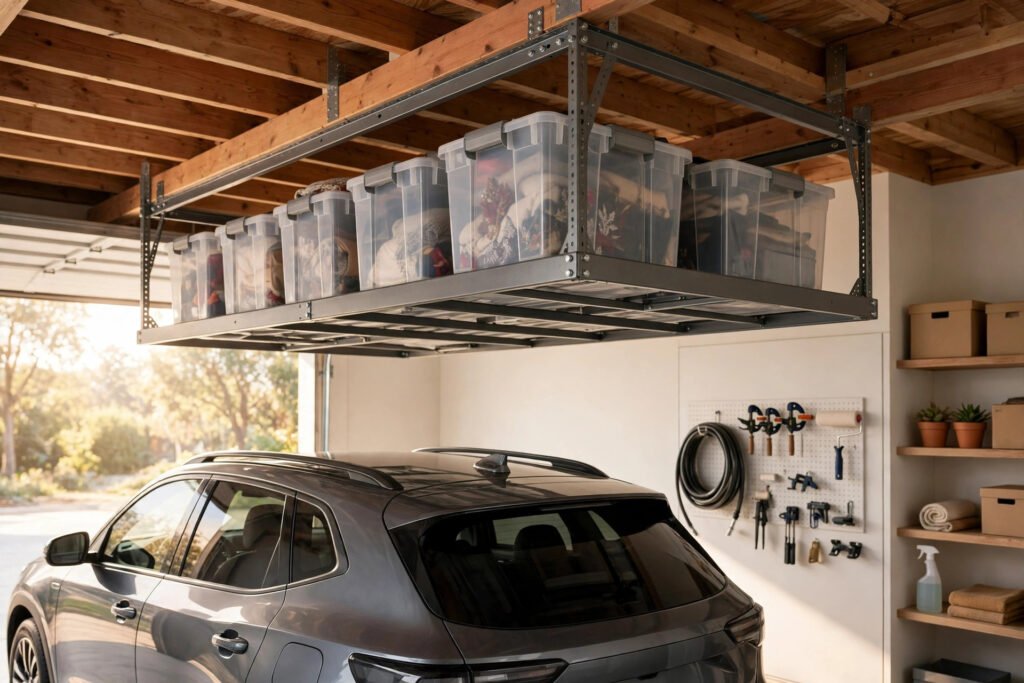
Ceiling storage is the same idea, pointed up. An overhead rack bolts into the ceiling joists and holds the seasonal bins — holiday decorations, camping gear, anything you touch two to four times a year. A 4 by 8 foot rack runs about $100 to $250 and holds 500 to 800 pounds. Our garage storage ideas guide covers overhead racks in detail, including which brands hold what and the joist safety rules. The short version: into joists it holds hundreds of pounds, into drywall it holds zero.
SMALL GARAGE SHELVING
A small garage does not need smaller shelves. It needs taller ones. Go up, not out: a 72-inch tall unit in a 12-inch depth holds as much as a 48-inch unit at 24 inches deep, and it eats half the floor. Put the daily stuff at eye level, the weekly stuff above it, and the seasonal stuff on the very top shelf, where a step stool reaches it.
The one thing a small garage cannot do is mix depths on one wall. A 24-inch unit next to a 12-inch unit leaves a dead corner nothing fits into. Pick one depth for the whole wall and stick to it. Twelve inches for a narrow garage, eighteen for most. And keep the parking spots taped on the floor, so the shelves never creep into where the car goes.

INSTALLATION: FIVE STEPS, ONE AFTERNOON
Freestanding shelving goes up in five steps, and skipping one is how units end up leaning. First, clear the wall and sweep the floor — a unit that starts on sawdust and grit never sits level. Second, assemble the frame on its side, then stand it up; fighting a tall frame upright while it is half-built is how shelves get bent. Third, level it. Put a level on the top shelf and shim the feet until the bubble sits dead center. Fourth, anchor it to the wall. One strap into a stud at the top stops a tall unit from tipping forward when a kid climbs it or an earthquake shakes it. Fifth, load it heavy at the bottom and light at the top. The bottom shelf takes the paint cans, the top shelf takes the holiday lights.
Wall-mounted shelves follow the same rule with one extra step: find the studs first. Mark them with painter’s tape, drill pilot holes, and use lag bolts, not screws. A lag bolt in a stud holds a hundred pounds. A screw in drywall holds a picture frame.
WHAT TO AVOID
The most common mistake is buying before measuring. The second is overloading the top shelf, which is the weakest shelf on the unit and the one that tips the whole thing forward. The third is trusting drywall anchors with anything heavier than a picture frame — shelves belong in studs or joists, full stop.
The fourth mistake is buying shelves for the stuff you wish you owned. A garage full of empty shelves is not organized, it is just a store. Sort first, measure second, buy third. Our garage organization ideas guide walks through the sort and the zone system, so the shelves you buy hold the stuff you actually kept.
WHAT IT COSTS
A starter setup — one 4 by 2 foot steel or wire unit and a 6-pack of clear bins — runs about $85 to $195. A heavy-duty wall — two steel units plus one wall-mounted shelf above the bench — runs about $230 to $680. A full wall-and-ceiling system with an overhead rack runs roughly $500 to $1,500.
The honest advice is the same as every article in this series: start with one unit, live with it for a month, and only then buy the next piece. The first month shows you what is actually missing, so the second purchase is the right one.
FREQUENTLY ASKED QUESTIONS
How much weight can garage shelves hold?
A standard steel or wire shelf holds 150 to 350 pounds per shelf, spread evenly. Heavy-duty steel holds 500 to 1,000 pounds per shelf. The rating assumes the weight is spread across the shelf, not piled in one corner, and the unit is level on a flat floor.
What is the best shelving for a garage?
Steel for heavy things like paint cans and toolboxes, wire for bins and light boxes, wood for odd-sized walls, wall-mounted for the space above the workbench. Most garages end up with a mix: steel on the floor, wire for bins, one wall shelf above the bench.
How deep should garage shelves be?
Twelve inches for a narrow garage, 18 inches for most garages, 24 inches only where you have floor to spare. A 24-inch unit eats 24 inches of floor it never gives back, so measure the wall and the parking spots before you buy.
Are wire shelves good for a garage?
Yes, for bins and light boxes. Chrome wire lets air move and dust fall through, and you can see the bin labels below. Use epoxy-coated wire in a damp garage, and put a shelf liner on any shelf that holds small parts.
Can I put shelves on drywall?
No, not for anything heavy. Drywall anchors hold about 25 pounds. Shelves belong in studs with lag bolts, or as freestanding units on the floor. A shelf full of tools weighs far more than drywall can hold.
How high should garage shelves be?
A freestanding unit 72 inches tall fits most garages and puts the top shelf within reach of a step stool. Wall-mounted shelves go above the workbench, about 48 to 60 inches off the floor, so tools sit at eye level and the bench stays clear.
What about ceiling storage?
An overhead rack bolts into the ceiling joists and holds seasonal bins — holiday decorations, camping gear, anything used two to four times a year. A 4 by 8 foot rack runs about $100 to $250 and holds 500 to 800 pounds. Into joists it holds hundreds of pounds, into drywall it holds zero.
How much does garage shelving cost?
One steel or wire unit runs about $60 to $150. A heavy-duty unit runs about $100 to $300. A starter setup with bins runs about $85 to $195, and a full wall-and-ceiling system runs roughly $500 to $1,500.
Wood or steel shelves — which is better?
Steel for heavy loads and zero building time. Wood for odd-sized walls and custom depths, at about $40 to $100 in lumber for a Saturday build. Steel wins on convenience, wood wins on fit.
How do I organize a small garage with shelves?
Go tall, not wide: 72-inch units in a 12-inch depth, daily stuff at eye level, seasonal stuff on top. Pick one depth for the whole wall, and keep the parking spots taped on the floor so shelves never creep into where the car goes.
THE BOTTOM LINE
Garage shelving works when the shelf matches the load. Steel for heavy things, wire for bins, wood for odd walls, wall-mounted above the bench, ceiling for the seasonal bins. Measure the wall first, check the weight rating twice, anchor into studs, and load heavy at the bottom.
Once the shelves are up, the system around them is the next job. Our garage organization ideas guide covers the sort, the zones, the labels and the 15-minute monthly reset, and our garage storage ideas guide covers the racks, cabinets and bikes that share the wall with your new shelves.



2 Comments