
Garage Cleaning: A Step-by-Step Deep Clean Guide
Garage Cleaning: How to Deep Clean Your Garage

Garage cleaning is the job every homeowner puts off, and it shows. Dust on every shelf, oil stains on the floor, cobwebs in the corners, and a smell nobody can name. A deep clean takes one day, costs less than $50 in supplies, and the garage stays clean for months afterwards — if you put it back the right way.
This guide walks through the clean in the order that works: empty it, sort it, dust top to bottom, clean the floor, then put it back in zones. By the end you will know how to remove oil stains, control the dust, and keep the garage clean with a 15-minute monthly routine.
BEFORE YOU START: SAFETY AND SUPPLIES
A garage is a chemical store as much as a room, so start with safety. Wear gloves and a dust mask — the dust in a garage is concrete dust, mouse droppings and old paint, not house dust. Open the door for ventilation before you sweep, and never mix cleaners: bleach and ammonia make a gas that can put you in hospital, and both are common in garage shelves.
The supplies cost about $30 to $50: a stiff push broom ($15 to $25), a dustpan, a bucket, a scrub brush, a concrete degreaser ($10 to $20), a bag of kitty litter ($5 to $10) for fresh oil, and trash bags. A shop vacuum ($50 to $100) helps, but a broom does the job. A pressure washer is optional — a rental runs about $50 to $80 a day — and it is worth it only if the floor is badly stained.
EMPTY THE GARAGE FIRST
You cannot clean a garage that is still full. Pull everything out onto the driveway, in the same sort our garage organization ideas guide uses: keep, donate, trash. The driveway is the sorting floor — it is flat, bright, and it forces the decision, because nothing goes back inside until it has a place.

The sort is where the cleaning really happens. Half of what comes out of a garage is trash, broken, or something nobody has touched in two years. Throw it out now, while it is on the driveway, or it goes straight back onto the shelf and the garage is dirty again by next month.
DUST TOP TO BOTTOM
Dust falls down, so clean from the top. Start with the ceiling and the corners: a broom knocks down the cobwebs and the dust on the rafters. Then the shelves and the walls — wipe each shelf before anything goes back on it, or the dust just moves from the shelf to the bin and back again.
The garage door tracks get the same treatment: brush the dirt out of the tracks and wipe the rollers, because a dirty track is why the door sticks and squeals. While you are up there, check the door seals — a cracked seal lets dust, water and mice straight in, and a new seal costs about $10 to $20.
THE FLOOR: SWEEP, STAIN, WASH
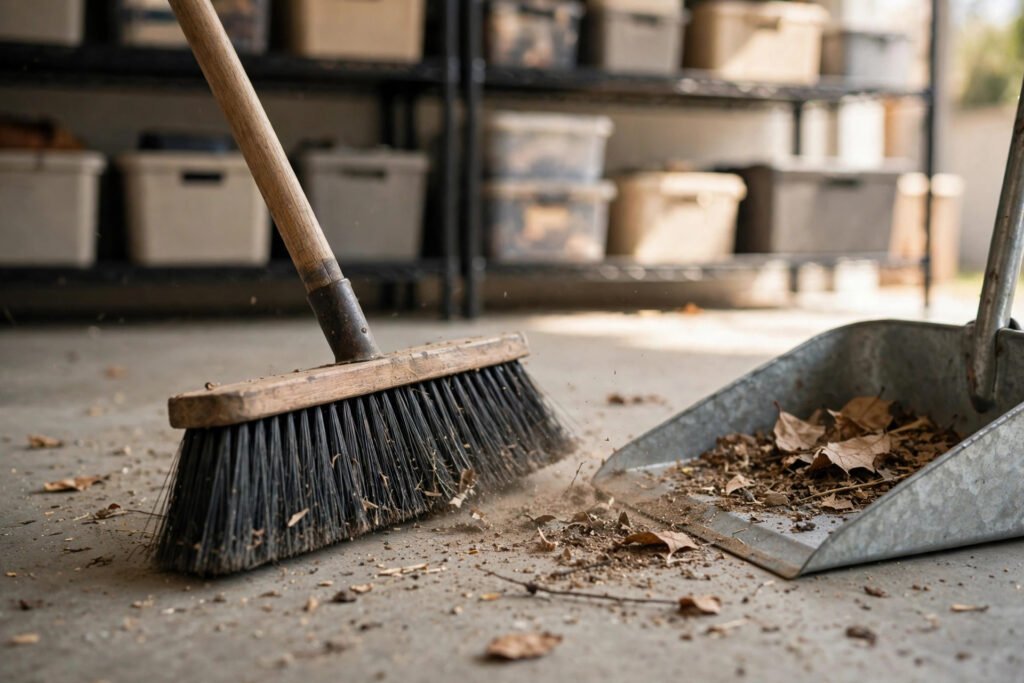
The floor is the dirtiest surface in the garage, and it gets three passes. First, sweep: a stiff push broom, from the back wall to the door, and sweep the dirt out, not into a pile in the corner. Second, the oil stains: cover a fresh stain with kitty litter and leave it overnight — the litter soaks up the oil. For an old stain, pour on concrete degreaser, scrub it with the brush, and let it sit for 15 minutes before rinsing.

Third, wash the floor. A bucket of hot water and concrete cleaner ($15 to $30), scrubbed in sections, lifts the ground-in dirt a broom never touches. A pressure washer does it faster — one pass, back to front, and the floor looks new — but keep the nozzle moving, or it etches lines into the concrete. Let the floor dry completely before anything goes back, or the bins trap the damp underneath.

WALLS, DOOR AND SMELL
Walls get a wipe, not a wash: a damp cloth on the painted walls lifts the dust, and a brush on bare drywall knocks the cobwebs off. The garage door itself gets a wash — soap and water on the outside, a wipe on the inside panels — because a clean door is half the look of the garage from the street.
The smell is the last thing to fix, and it has a cause. A musty smell means damp: find the leak, the cracked seal, or the cardboard boxes sitting on the floor soaking up water. Cardboard on a concrete floor is a sponge — it wicks moisture, grows mold, and smells. Get the boxes off the floor onto a shelf, or into plastic bins, and the smell goes with them. Mice leave a smell too, and droppings near the walls: seal the gaps with steel wool and caulk, and store the birdseed and pet food in sealed bins, because an open bag is a mouse dinner.
PUT IT BACK IN ZONES
A clean garage goes dirty again fast if everything goes back where it was. Put it back in zones, the same system from our garage storage ideas guide: the daily zone by the door, the work zone around the bench, the seasonal zone on the ceiling rack, the sports zone on the wall. Label the bins before they go on the shelves — a bin without a label is a bin that gets opened, dumped and left.
The floor stays clear. That is the whole rule. Nothing on the floor except the cars, the workbench and the trash can. A clear floor sweeps in five minutes, and a floor with boxes on it never gets swept at all. Our garage shelving guide covers the steel, wire and wood shelves that keep everything off the concrete.
KEEP IT CLEAN: THE 15-MINUTE MONTHLY ROUTINE
A deep clean once a year, a 15-minute routine once a month, and the garage never gets dirty again. The routine is four jobs: sweep the floor, wipe the workbench, check the bins for anything that crept back onto the floor, and take the trash out. Fifteen minutes, one Saturday a month, and the deep clean stays done.

The seasonal deep clean is the same job, bigger: spring for the winter salt and the dead leaves, autumn for the summer dust and the garden gear. Two deep cleans a year, one hour each if the monthly routine held, and the garage is the cleanest room in the house.
WHAT TO AVOID
The most common mistake is cleaning around the clutter. A garage cleaned with everything still inside is a garage with clean paths and dirty shelves. Empty it first, every time.
The second mistake is the pressure washer on everything. It is perfect for the floor, and it ruins the garage door seals, the drywall and the cardboard boxes in one pass. Floor only, nozzle moving, and never point it at the walls.
The third mistake is the wrong cleaner on the wrong stain. Bleach on concrete eats the surface and leaves white patches. Degreaser on paint lifts the paint. Match the cleaner to the surface — concrete cleaner for the floor, soap and water for the walls — and test a small spot first.
WHAT IT COSTS
The supplies for a deep clean run about $30 to $50: broom, degreaser, kitty litter, trash bags. A shop vacuum adds $50 to $100 if you buy one, and a pressure washer rental adds $50 to $80 a day. A full day of your time, and the garage is clean for months. The honest advice is the same as every article in this series: start with the cleanout, live with the clean garage for a month, and only then buy the next piece of storage.
FREQUENTLY ASKED QUESTIONS
How often should I clean my garage?
A deep clean once or twice a year, and a 15-minute sweep and tidy once a month. The monthly routine is what keeps the deep clean from becoming a full-day job again.
How do I remove oil stains from a concrete garage floor?
Cover a fresh stain with kitty litter overnight — the litter soaks up the oil. For an old stain, pour on concrete degreaser ($10 to $20), scrub it with a stiff brush, let it sit 15 minutes, then rinse. Repeat once if the stain is still there.
What is the best garage floor cleaner?
A concrete cleaner or degreaser made for garage floors, about $15 to $30. Hot water and a stiff brush do most of the work. Avoid bleach on concrete — it eats the surface and leaves white patches.
How do I get rid of the smell in my garage?
Find the cause: damp cardboard on the floor, a cracked door seal, or mice. Get the boxes off the floor into plastic bins, replace the seal, and seal gaps with steel wool and caulk. The smell leaves when the damp and the mice leave.
How do I clean a garage without a pressure washer?
A stiff push broom, a bucket of hot water with concrete cleaner, and a scrub brush. Sweep first, scrub in sections, rinse with the bucket. It takes longer than a pressure washer, but the result is the same.
How do I control dust in my garage?
Sweep monthly, wipe the shelves, and seal the gaps — a cracked door seal lets street dust straight in. Painted walls hold less dust than bare drywall, and a doormat at the door catches what the shoes bring in.
How do I keep spiders and mice out of my garage?
Seal the gaps with steel wool and caulk, keep the door seal tight, and store birdseed and pet food in sealed bins. Clear the cobwebs from the ceiling and corners every time you sweep, or the spiders come back.
Can I clean my garage in a day?
Yes — a deep clean takes one day: morning to empty and sort, midday to dust and wash the floor, afternoon to put it back in zones. A badly cluttered garage takes a weekend, because the sort takes longer than the cleaning.
What supplies do I need to clean a garage?
A stiff push broom, a dustpan, a bucket, a scrub brush, concrete degreaser, kitty litter for fresh oil, and trash bags — about $30 to $50. A shop vacuum and a pressure washer rental are optional extras.
How do I keep my garage clean after cleaning it?
Nothing on the floor except the cars, the bench and the trash can, and a 15-minute routine once a month: sweep, wipe the bench, check the bins, take the trash out. A garage with a clear floor stays clean, because sweeping it takes five minutes.
THE BOTTOM LINE
Garage cleaning works when it goes in order: empty it, sort it, dust top to bottom, clean the floor, then put it back in zones with a clear floor. Supplies cost about $30 to $50, the job takes a day, and a 15-minute monthly routine keeps it clean for months.
Once the garage is clean, the systems that keep it that way are the next job. Our garage organization ideas guide covers the zone system and the daily habits, and our garage makeover guide covers the floor, paint and lighting that turn a clean garage into a finished one.

