
Home Backup Power: What to Buy for Every Outage

Home backup power is the difference between a bad evening and a ruined week. When the power goes out, the question is never just “how do I get electricity” — it is “what do I actually need to keep running, and for how long?” A phone charger for two hours is a $100 problem. A fridge, a sump pump and a CPAP machine for three days is a $1,000 problem. This guide matches the backup to the outage, so you buy once and buy right.
WHAT YOU ACTUALLY NEED TO KEEP RUNNING
Start here, not at the store. Walk through your house and list what matters when the power dies. Most homes land on the same short list: the fridge and freezer, a few lights, the Wi-Fi router, phones, and — if anyone in the house uses one — a CPAP machine. In a cold climate add the furnace fan and a space heater circuit; in a house with a basement add the sump pump, because a dead sump pump during a storm is how a power outage becomes a flood.
Then check the watts, because watts decide everything. A fridge runs at about 100 to 200 watts but needs 600 to 1,200 watts for a few seconds when its compressor starts — that starting surge is the number that kills undersized backups. A Wi-Fi router uses only 10 to 20 watts. A CPAP machine uses 30 to 60 watts. A sump pump needs 800 to 1,000 watts running and double that to start. LED lights are almost free at 10 watts each. Add up the running watts of everything you listed, then double the biggest motor (fridge or sump pump) for its starting surge. That total is the size of the backup you need — anything smaller will trip, shut down, or simply not start the fridge.
THE FOUR OPTIONS, AT A GLANCE
There are only four ways to back up a home, and they sit on a simple ladder of cost and capability. A UPS (uninterruptible power supply) costs $100 to $300, runs for minutes, and keeps a router, a laptop and a CPAP alive through a short blip. A portable power station costs $200 to $2,500 depending on size, runs for hours, and is a silent battery box you charge from the wall or the sun. A portable generator costs $400 to $1,500, runs for as long as you have gas, and is the only cheap way to cover days. A whole-home battery or standby generator costs $5,000 to $15,000 installed, runs the house automatically, and is the only option you never have to think about. The rest of this guide takes each outage length and picks the right rung.
UNDER 4 HOURS: A UPS AND A SMALL POWER STATION
Most outages are short — a blown transformer, a tree on a line, a brownout that lasts an hour. For anything under four hours, a UPS and a small portable power station cover the whole list. A UPS in the $100 to $300 range keeps the router and a laptop running for 30 to 90 minutes and gives a CPAP machine a full night on its lowest setting. It switches over in milliseconds, so the Wi-Fi never drops and nobody wakes up. It will not run a fridge — do not try; the battery is far too small.

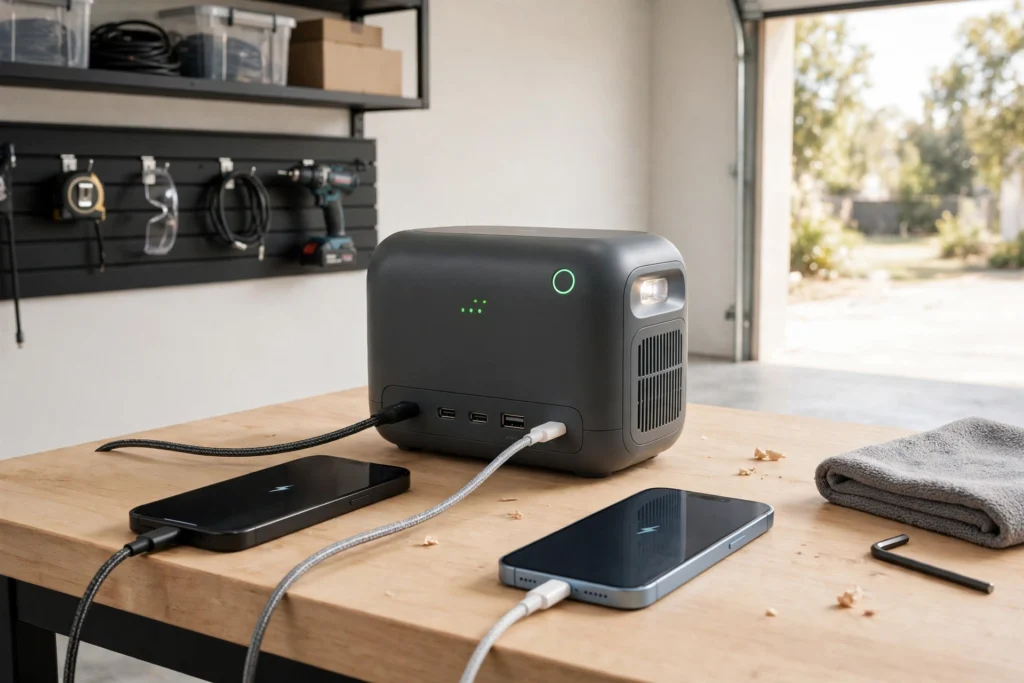
Pair it with a small 300 watt-hour portable power station. Brands like Jackery, EcoFlow and Anker sell these for $200 to $400. A 300Wh station charges every phone in the house several times over, runs a router for a full day, and powers LED lights all evening. It recharges from a wall outlet in a few hours, so it is ready again before the next storm. Keep both charged and plugged in all the time — a backup with a dead battery is a paperweight, and the most common failure in a real outage is the owner forgetting to charge it.
4 TO 24 HOURS: A MID-SIZE POWER STATION, MAYBE WITH SOLAR
When the outage stretches past dinner and into the next day, the fridge becomes the problem. Food in a closed fridge stays safe for about 4 hours; a full freezer holds for about 48 hours if you never open it. The sweet spot here is a mid-size 1,000 watt-hour portable power station, $600 to $1,000. It runs a modern fridge for 8 to 12 hours, charges phones and laptops, and powers lights and the router at the same time. Run the fridge in shifts if you need to stretch it — two hours on, one hour off — and a 1,000Wh station covers a full day.
Add a 100 to 200-watt portable solar panel ($150 to $400), and the station recharges itself during the day. In good sun a 200-watt panel puts back roughly 800 to 1,000 watt-hours over a full day, which is close to what the fridge used overnight. That is the difference between a one-day backup and a multi-day one, with no gas, no noise and no fumes. This setup suits renters and anyone who does not want to store gasoline. It is silent and indoor-safe, and it works in an apartment as well as a house.

1 TO 3 DAYS: A PORTABLE INVERTER GENERATOR
Past 24 hours, batteries stop making sense and fuel takes over. A portable inverter generator in the 2,000 to 4,000-watt range costs $400 to $1,500. It runs the fridge, the lights, the router, the phones and a sump pump — not all at once, but in rotation. A 2,000-watt inverter generator runs 8 to 12 hours on a single tank of gas at light load, and a 5-gallon gas can buys another day. The Honda EU2200i is the well-known one at about $1,100; store brands with the same wattage run $400 to $700 and do the same job, just louder and with a shorter warranty.
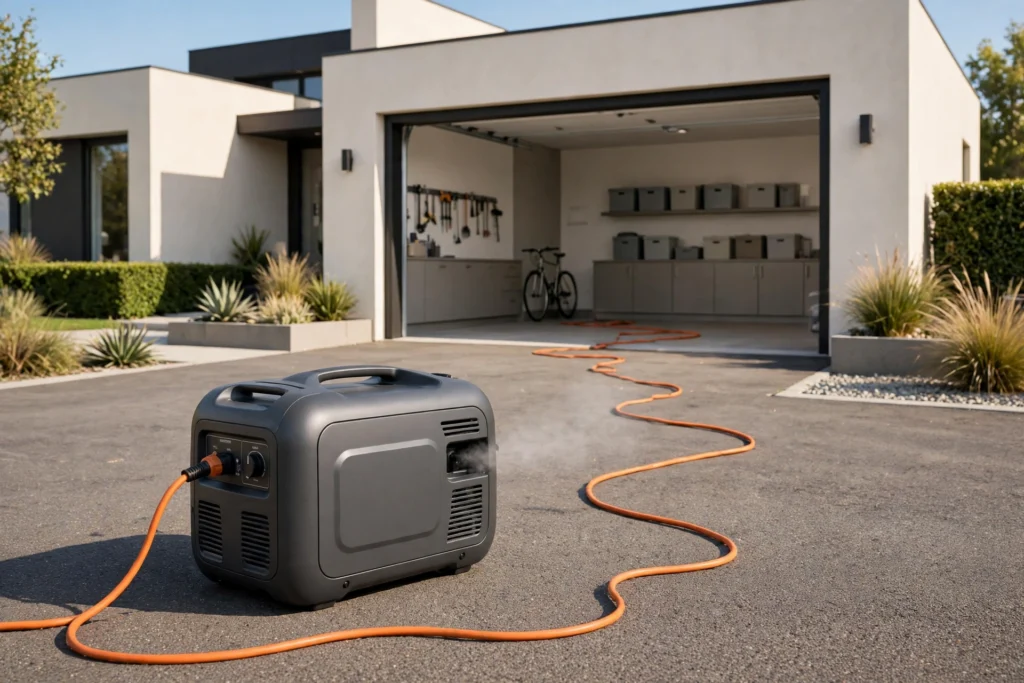
Two rules that are not optional. First, a generator never runs indoors, in the garage, or on a porch — not even with the door open. Generators kill about 70 people a year in the US from carbon monoxide, and most of those deaths happen because someone ran one in a garage during a storm. Keep it at least 20 feet from the house, exhaust pointing away from windows. Second, never plug a generator straight into a wall outlet to “backfeed” the house. It is illegal in most places, it can kill a line worker repairing the grid, and it can destroy the generator when the power comes back. Use heavy extension cords to the appliances directly, or pay an electrician $300 to $800 to install a transfer switch or an interlock kit, which is the safe and legal way to power house circuits.
LONGER THAN 3 DAYS: WHOLE-HOME BATTERY OR STANDBY GENERATOR
For a house that loses power for days at a time — hurricane country, wildfire shutoffs, ice-storm regions — the answer is automatic. A whole-home battery like the Tesla Powerwall (13.5 kWh) costs $9,000 to $11,000 for the unit plus $2,000 to $4,000 for installation, so $11,000 to $15,000 all in. With rooftop solar, it recharges every day and runs the fridge, lights, router and a well pump indefinitely in sunny weather. Without solar it is a very expensive one-day battery, so it only makes sense as part of a solar system.
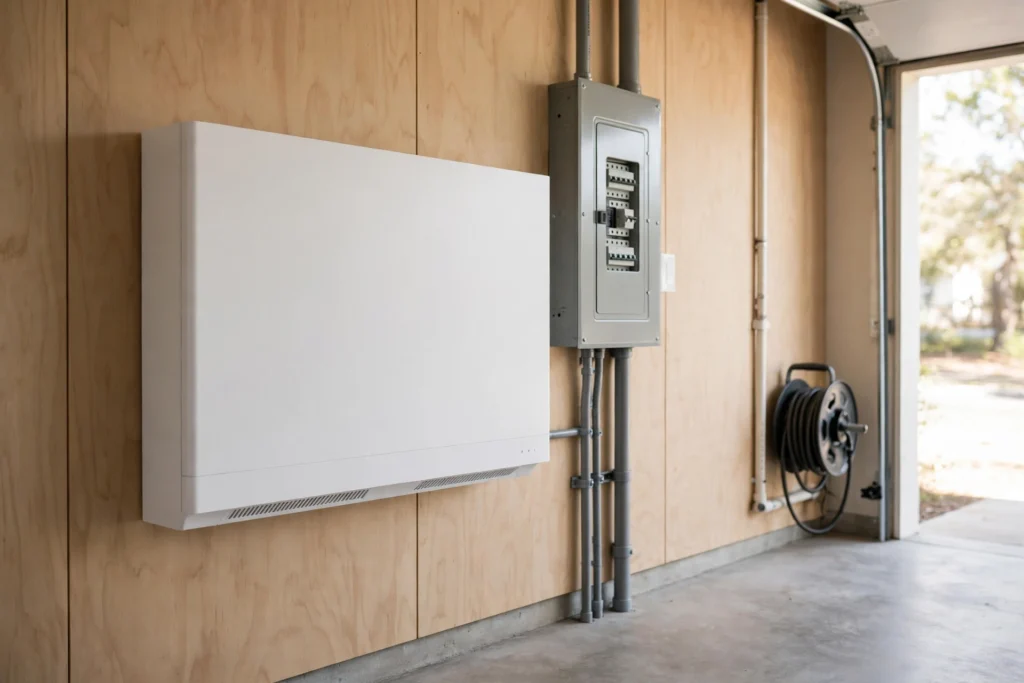
The other automatic option is a standby generator, usually Generac, $5,000 to $12,000 installed depending on size. It runs on natural gas or propane, starts itself within seconds of an outage, and powers the whole house including the air conditioner. It needs a yearly service and a gas supply, and it is the loudest and most expensive option — but it is also the only one that covers a week-long outage without anyone lifting a finger. For most homes this is overkill; it earns its price only where outages last days and happen every year.
WHAT IT COSTS
A short-outage kit — a UPS plus a small power station — runs $300 to $700 all in. A one-day kit — a 1,000Wh power station plus a 200-watt solar panel — runs $750 to $1,400. A multi-day kit — a 2,000-watt inverter generator, a transfer switch, gas cans and a stabilizer — runs $800 to $2,500. A whole-home battery with solar runs $11,000 to $15,000 for the battery alone, and a standby generator runs $5,000 to $12,000 installed. The honest advice is the same as every guide in this series: buy for the outage you actually get, not the one you fear. Most homes lose power for hours, not days, and the $750 kit covers that completely. Spend the rest on fuel, extension cords and a monthly test run, not on capacity you will never use.
WHAT TO AVOID
The most common mistake is buying too small. People buy a 300Wh station, plug in the fridge, and watch it shut down on the starting surge. Check the surge watts before you buy, and size for the fridge or the sump pump, not the phones. The second mistake is running a generator in the garage — it feels safe because it is out of the rain, and it is the single most dangerous thing in this whole guide. The third mistake is backfeeding the house through a dryer outlet; it is illegal, it endangers line workers, and it voids the generator warranty. The fourth mistake is storing gas without stabilizer and then finding the generator will not start in the one storm that matters — add stabilizer, rotate the fuel every six months, and test-run the generator for 20 minutes every month. The fifth mistake is cheap extension cords: a 100-foot 16-gauge cord drops voltage and overheats under a fridge load. Use a 12-gauge cord, keep it as short as you can, and never run two high-draw appliances on one cord.
FREQUENTLY ASKED QUESTIONS
How long can a portable power station run a fridge?
A 1,000 watt-hour station runs a modern fridge for about 8 to 12 hours. Run the fridge in shifts — two hours on, one hour off — and it stretches to a full day. A 300Wh station is too small for a fridge; it is for phones, lights and the router.
Is a portable generator safe to run in the garage?
No. Never run a generator indoors, in the garage, or on a porch, even with the door open. Carbon monoxide builds up fast and has no smell. Keep the generator at least 20 feet from the house with the exhaust pointing away from windows.
What size generator do I need for my house?
Add up the running watts of what you must power, then double the biggest motor for its starting surge. For a fridge, lights, router and phones, a 2,000-watt inverter generator is enough. Add a sump pump or a well pump and you need 3,500 to 4,000 watts.
Can I power my whole house with a portable power station?
No, not the whole house. A large 2,000Wh station runs the fridge, lights, router and phones for a day. It will not run an air conditioner, an electric water heater or an electric stove. Whole-house coverage needs a whole-home battery or a standby generator.
How long does a UPS last in a power outage?
A typical home UPS in the $100 to $300 range keeps a router and a laptop running for 30 to 90 minutes. It is built for short blips and safe shutdowns, not for running appliances. Pair it with a power station for anything longer.
Do solar panels work with a portable power station during an outage?
Yes. Most portable power stations accept a 100 to 200-watt solar panel directly, and a 200-watt panel restores roughly 800 to 1,000 watt-hours on a sunny day. That is enough to keep the fridge going while the station recharges.
What is the difference between a power station and a generator?
A power station is a big rechargeable battery — silent, indoor-safe, no fuel, limited runtime. A generator burns gasoline — loud, outdoor-only, unlimited runtime as long as you have fuel. Power stations cover hours; generators cover days.
How much does a whole-home battery cost?
A Tesla Powerwall costs $9,000 to $11,000 for the unit plus $2,000 to $4,000 for installation, so $11,000 to $15,000 all in. It makes sense with rooftop solar, which recharges it daily; without solar it is a very expensive one-day battery.
Can I connect a generator to my house wiring?
Only through a transfer switch or an interlock kit installed by an electrician, $300 to $800. Never plug a generator into a wall outlet to backfeed the house — it is illegal in most places, it can kill a line worker, and it can destroy the generator when grid power returns.
How often should I test my backup power?
Run the generator for 20 minutes every month and keep the power station charged to at least 80 percent. Rotate stored gasoline every six months and add fuel stabilizer. A backup that has never been tested is a guess, not a plan.
THE BOTTOM LINE
Home backup power is a ladder, and the right rung is the outage you actually get. Under four hours: a UPS and a small power station, $300 to $700. Four to 24 hours: a 1,000Wh station and a solar panel, $750 to $1,400. One to three days: an inverter generator and a transfer switch, $800 to $2,500. Longer than that: a whole-home battery with solar or a standby generator, $5,000 to $15,000. Size it for the fridge, never run a generator in the garage, and test it monthly. The storm will not wait for you to read the manual.